













 Marco Sebastiano Alessi |
April 24, 2026
Marco Sebastiano Alessi |
April 24, 2026


The development of Virtual Studio Technology (VST) was a breakthrough in music production. VST plugins allow effects and virtual instruments to work within a digital audio workstation (DAW) to create music "in the box", opening the door for many producers who could not afford to rent studio time or expensive hardware.
In today’s post, we discuss the best virtual instruments for music production in 2026. Let’s dive in!
7 Best Virtual Instruments in 2026
1. Native Instruments Kontakt 8
Kontakt 8 is one of the largest virtual instrument libraries, featuring a factory library of hundreds of carefully sampled instruments for orchestra, acoustic, band, beats, synths, choirs, and more. The latest version added some powerful creation tools for MIDI generation and sound design.
Chords and Phrases help you generate melodic lines from the notes you play or transform them into rich chords. Patterns is a hybrid arpeggiator and step sequencer with granular control, and Leaps manipulates loops like a performance sampler.
Pros:
- Clean user interface.
- A clean browser for navigating and auditioning your own sounds in the main window.
- Seamless integration with Native Instruments hardware.
Cons:
- CPU-intensive.
- Outdated editor.
2. Spectrasonic Omnisphere 3
Omnisphere offers versatility, sound quality, and creative possibilities. It’s a VST instrument with an extensive library of samples and presets that work well for music production, film scoring, and sound design.
It features a few niche instruments and sounds rarely found in other plugins and libraries, such as Blown Ostrich Egg, Tonal Sand, Nyckelharpa, Percussive Snow, and more, making it attractive to music producers.
Pros:
- A vast range of presets and samples with niche instruments.
- A hybrid engine combining sample libraries and a wavetable synth.
- Hardware integration with major brands and controllers, including support for MPE.
Cons:
- Price.
- It is CPU-intensive, requires a powerful computer, and only works on 64-bit systems.
- Steep learning curve.
3. Xfer Records Serum 2
Serum 2 is the long-awaited upgrade to the original Xfer Serum, one of the most popular wavetable synthesizers worldwide, expanding on the original features to become a hybrid powerhouse with granular, spectral, and sampling engines added to the wavetable core.
It features five oscillator modes and a new mixer page that functions like a mixing console for panning, level adjustments, and routing. The arpeggiator and clip sequencer let you explore your creativity, creating rhythmic patterns without drawing MIDI notes. With Serum 2, you now have expanded modulation with up to 10 LFOs, as well as enhanced drawing tools and an editor.
Pros:
- Lifetime free updates.
- Audio quality.
- New enhanced FX.
- Enhanced modulation.
Cons:
- Steel learning curve.
- Cluttered interface.
- Feels limited for acoustic sounds.
4. Toontrack Superior Drummer 3
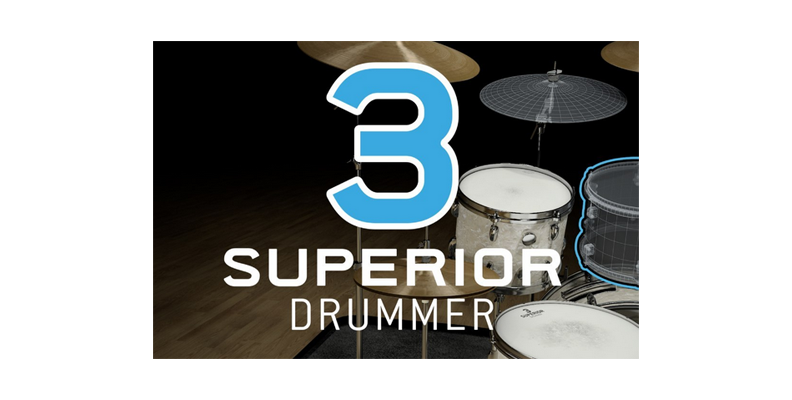
Superior Drummer 3 is regarded as the king of professional drum production. It’s a complete virtual drum studio offering unmatched sonic detail, with a large library of over 230 GB of sampled drums, featuring 7 core kits with a variety of snares, kicks, and cymbals, and over 350 electronic kits to cover all your musical genres.
Other key features include a grid editor with a full-featured MIDI sequencer and a professional mixer desk with 35 effects modeled on classic analog gear, allowing you to route, send, and mix your drums with total control.
Pros:
- Sonic depth.
- Total control to control even the bleed of the microphones.
- Internal mixing.
- Can increase your drum libraries with the SDX sound expansions.
Cons:
- Price.
- Requires a large hard disk for storage.
- CPU–intensive.
- Learning curve.
5. Native Instruments Guitar Rig 7 Pro
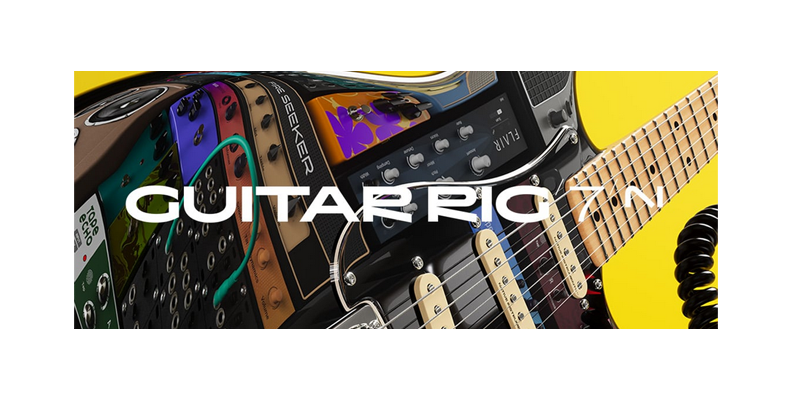
If you’re looking for realistic guitar and bass sounds, Guitar Rig 7 Pro offers amp simulators, pedals, and studio effects powered by Intelligent Circuit Modeling (ICM), a machine-learning technology that replicates hardware behaviour for a more organic guitar and bass sound.
It features 26 amps, including Super Fast 100, Reverb Delight, Citrus, and more, plus a cabinet impulse response loader for your favorite IRs. To shape your sound, Guitar Rig provides 115 effects and tools and over 1,000 presets.
Pros:
- Intuitive and easy to navigate UI.
- Classic amps.
- Impulse response loader.
Cons:
- CPU-intensive
- Those looking for tube-amp realism may be disappointed.
6. Spitfire BBC Symphony Orchestra Discover
The BBC Symphony Orchestra Discover plugin makes orchestral scoring accessible to creators of all skill levels. It’s one of the best entry-point orchestral instruments, especially if you’re starting in film scoring.
It features 34 instruments, including a grand piano, strings, woodwinds, and brass, along with 47 techniques. It’s available in three editions, all featuring the same professional recording of the BBC Symphony Orchestra.
Pros:
- Free version that can be upgraded.
- Easy-to-use plugin with minimal UI.
- Cohesive sound.
- Compatible with all major DAWs.
Cons:
- 1 mix signal.
- Lacks legato and round robins.
7. Arturia V Collection

The Arturia V Collection is a collection of virtual instruments that recreate the world’s most famous synths, electronic pianos, and organs, such as the Minimoog, Jupiter-8, Prophet-5, and DX7, as well as modern instruments that blend synth and acoustic samples with the Augmented Series.
It uses True Analog Emulation (TAE) technology to replicate the sounds and behaviour of electronic components, achieving authentic sound. It’s a joy for any keyboard and piano player looking for the classic sounds or a vast library.
Pros:
- Seamless integration with Arturia hardware that is pre-mapped to the plugin.
- Includes Analog Lab Pro for easy browsing of your presets.
- Authentic sound emulation.
Cons:
- Price.
- Having too many presets can overwhelm.
- Requires a lot of storage.
- CPU-intensive
Which DAW Has the Best Virtual Instruments?
Almost any DAW can host virtual instruments, but not all come bundled with enough to keep producing for a long time with the stock VST plugins. The following DAWs are the ones I consider to have the best library of VST instruments.
Samplitude
Samplitude is a Windows DAW that stands out for its object-based workflow and advanced engineering features. Its virtual instruments are known for their realism, with high-end sampling. It features string (plucked and bowed), wind, world percussion, acoustic drums, drum machines, keyboard, and synthesizer instruments that do not sound like “stock sounds”. It excels at orchestral and rock music thanks to its realistic VST instruments.
Logic Pro
Apple’s Logic Pro is praised for its stock virtual instruments and is considered an all-around DAW that offers great value for money. Virtual instruments include a granular, additive, and spectral synth, realistic orchestral brass and string instruments, and the AI-powered drummer session player. Logic Pro suits better songwriters and composers who want something out of the box that covers most genres. Unfortunately, it’s only available on Mac.
Ableton Live

Ableton Live is best suited to electronic music, live performance, and modern pop, especially the Suite edition. It features a modern, intuitive wavetable and FM synth, an easy-to-use sampler with praised warping capabilities, and sound packs that include synth, guitars, pianos, drums, strings, vocals, and more.
FL Studio All Plugin Edition

The FL Studio All Plugins bundle can keep you producing music for years without needing extra virtual instruments and VST plugins. It features iconic synths tailored for Hip-Hop and EDM. Its key instruments are Harmor, a powerful, advanced additive synth with resynthesis capabilities; Sytrus, an FM/subtractive synth with deep modulation; and Flex, a powerhouse synth for sound design. It’s better suited for Trap and Hip-Hop if you like its pattern-based non-linear workflow.
Final Words
There are many virtual instruments on the market, and even though they look like they do almost the same thing, each one has one or more secrets up its sleeve. It’s always a good entry point to start with a DAW that comes with enough virtual instruments to get you into your creative zone. Once you realise your workflow lacks something, you can think about upgrading; a complete and powerful option is to start with one of the DAWs mentioned, such as Samplitude, which you can download and try for free!
FAQ
Are Virtual Instruments Any Good?
Yes. Virtual instruments are excellent tools for producing music, and they have evolved over the years. Many developers use recording processes to capture the authentic sound of the instruments, sometimes making the samples indistinguishable from the real instruments. Today, virtual instruments are an important part of the workflow for many professional sound designers, songwriters, and musicians.